
Ten subjects, ten months, thousands of mental breakdowns, all leading up to one thing: A massive team competition.
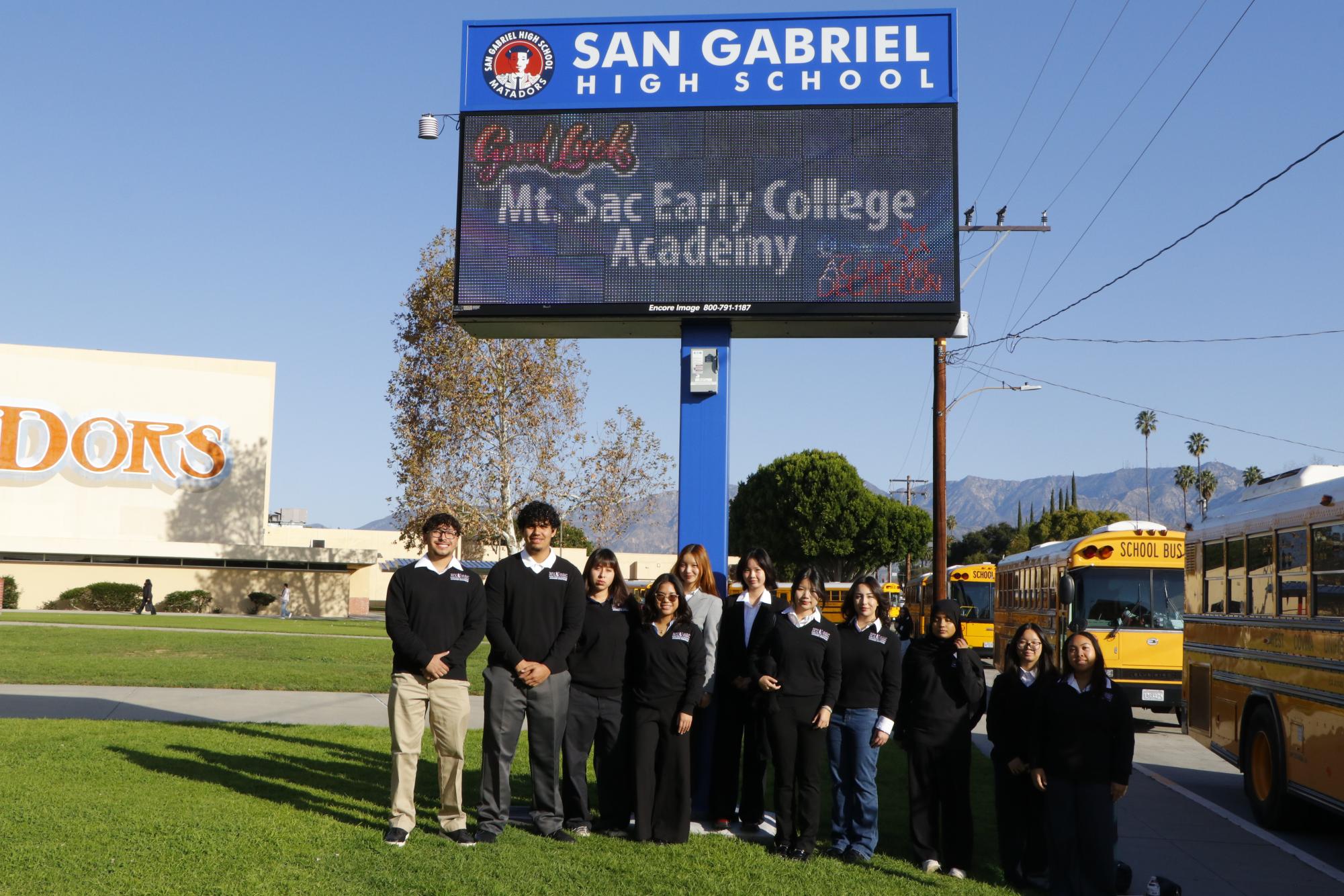
In Academic Decathlon, MECA teammates compete against other high school students to find out who is more knowledgeable/skilled with math, science, literature, economics, art, music, speech, interview, and essays. All these topics are tied together by a central theme, which was The Roaring 20s for the 2025-2026 school year. Teams also participate in Super Quiz, where they answer questions in front of a live audience with only seconds to respond. This year, the competitions were held at the end of January: Objective Testing was held online on Jan. 24, the essay contest was held online on Jan. 28, and the final competition with Speech & Interview and the Super Quiz were held at San Gabriel High School on Jan. 31.
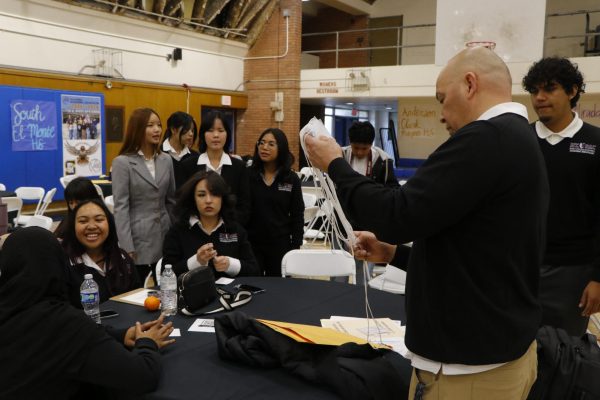
The speech portion includes both prepared and impromptu speeches. One junior, Katelyn Chung, spoke about cultural beliefs surrounding death.
She shared, “I went to my grandpa’s funeral and since he was Buddhist. We gave him offerings and guided him to the afterlife in a way… Death is scary since it is something inevitable. These beliefs give people reassurance that death isn’t a total end, but a transition into another path. It’s what makes us so human, and I love that part of our identities.”
The fascination of life after death is relatable for many people, but it is not often discussed. In their speech, students have the rare opportunity to explore topics like this and share their own identities or personal experiences.
Another junior, Genevieve Hijar, spoke about the mosaic effect. When asked what inspired her to choose this topic, Hijar said, “I feel it’s important to bring awareness…A lot of times our privacy settings are meant to just give us false security. It’s important for people to make sure that they really know what they’re putting online, especially when that data is vital information that if gotten into the wrong hands, can put your physical and digital life at risk.”
In the impromptu speech, participants have one minute to plan a 1 ½ to 2-minute speech. Since prompts are different every time, decathletes must learn how to adapt their responses. Some strategies students used were practicing with random topic generators, timing their responses, and reviewing prompts from previous competition.
Participants are also interviewed for seven minutes, answering questions about what they want to do in the future, their favorite class or book, a time they showed creativity, their favorite teacher, who inspired them, and what they would say to their future self. While there are certain criteria students are required to follow, judges are not looking for perfection.
As Chung said, “Preparing what to say in advance is good, but…sometimes having to think about the question on the spot brings the most authentic answers, and that is exactly what the judges are looking for.”
Additionally, the skills used in impromptu and interview extend far beyond Academic Decathlon.
“The interview part of Academic Decathlon helped me get a better understanding of what to expect in the future when I do have to go through actual interviews in the real world,” said Hijar.
After four years of high school, students will be out in the wild, heading into college or trying to find a job. This makes it especially important to know how to recover from mistakes and advocate for themselves.
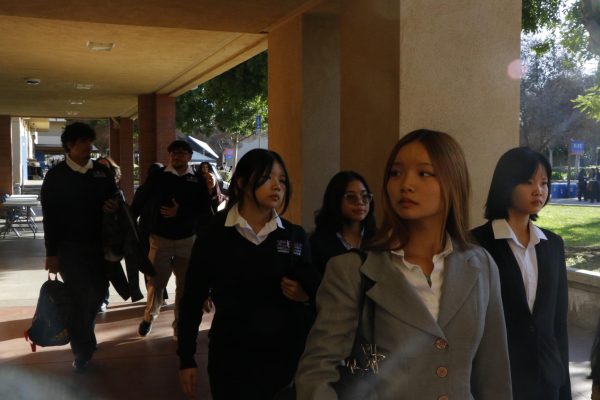
The ability to work under pressure is also necessary for the essay portion, where students have 50 minutes to answer a prompt. Here, students must analyze what they remember of the readings and apply it to their writing.
In addition to preparing for their speech, interview, and essay, completing school assignments, and juggling extracurriculars, students must memorize more than a thousand pages of material. “Having to cover 10 topics in 6 months creates a time crunch and there’s no space for procrastination,” Chung said.
Hijar agreed, saying, “I feel like if I would have studied better in advance, that would have helped me a lot more overall. Though, I was able to get through it by putting in a lot of effort, especially towards the end, and taking notes, reviewing the textbook, asking peers for help, and seeing how they did on the tests.”
Finally, after the competition, students can relax, celebrate their hard work, and eat good food at the banquet. Last year, this closing ceremony was held at the RMS Queen Mary, a retired ocean liner turned floating museum and hotel.
“My favorite part of Decathlon is the banquet. We visited the Queen Mary, and it has so much history, so running around and looking at the exhibits is so fun,” Chung said.
The banquet is also where awards are presented: Top scorers in each category receive gold, silver, and bronze medals, and the highest-scoring teams in the Super Quiz event are recognized with trophies and banners.
This year’s banquet will also be held at the Queen Mary on Feb. 19. Students will find out the results of all of the competitions at the banquet.
Next year, Chung and other seasoned students plan to help new members prepare for the competition.
“I hope to be a coach or mentor for the other members since we weren’t able to focus on Interview, Speech, or Impromptu speeches this year,” Chung said. Drawing on their own experience, these mentors can provide valuable tips and tell new members what to expect.
Overall, although the competition requires a serious time commitment, it is also an amazing opportunity to grow.
If you’re reading this article, take it as your sign: join Academic Decathlon, and make your high school experience unforgettable.