


Years after financier Jeffery Epstein died in prison, his name has resurfaced in the news with the release of the Epstein files: a collection of court and investigative documents related to his criminal cases.
The Epstein files were released in batches from December 2025 to early January 2026 by the U.S. government after public pressure and congressional action.
The files include court records, flight logs, emails, and other important evidence about Epstein’s criminal activities and the investigations involving him.
Primarily focusing on Epstein and his associate, Ghislaine Maxwell, mention of victims, employees, and public figures who had contact with him has been further included.
While the files mainly focus on Jeffrey Epstein and his convicted associate, Ghislaine Maxwell, they also mention a number of other people who were connected to Epstein. This includes employees, assistants, and people from his inner circle, a lot of whom were involved in running his properties or assisting in his activities but were not charged with any crimes.
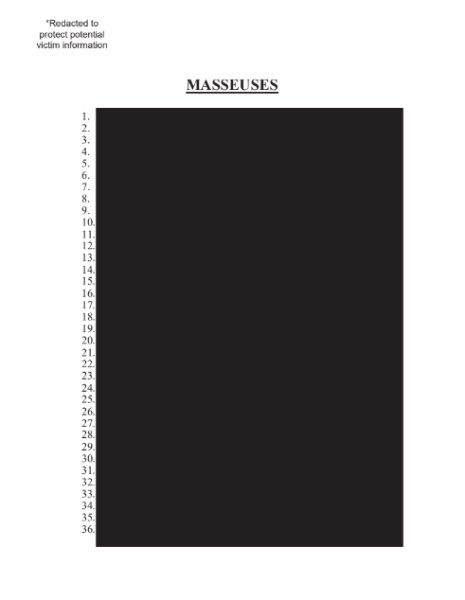
The files also reveal the names of the victims—the names which have since been mostly redacted to protect their privacy.
Some public figures also appeared in the files because of their social or business contact with Epstein, but being mentioned in the files doesn’t mean that they were accused or convicted of anything. The only people who were convicted were Jeffrey Epstein and Ghislaine Maxwell.
The Epstein files were released after years of public pressure, lawsuits, and congressional action that aimed at increasing transparency.
The U.S. government had kept most of the documents sealed because they contained sensitive information, including victims’ identities; a lot of them were underage at that time.
To protect privacy and comply with the law, a lot of the material was redacted, meaning names, contact information, and other identifying details were blacked out. The release of the Epstein files allowed the public to better understand Epstein’s criminal activities and the investigation.
The files were created and maintained by the U.S. government over the course of the years of the investigation.
The FBI made the primary criminal investigations, while the Department of Justice (DOJ) controlled the documents. And the federal and state courts were involved in reviewing, sealing, and approving the release.
The documents talk about Epstein’s 2006-2008 plea deal in Florida, his 2019 federal arrest in New York, and investigations related to his associates.
Following Epstein’s death in August 2019 and the conviction of Ghislaine Maxwell in 2021, public and legal pressure grew, which ultimately led to Congress passing the Epstein Files Transparency Act, which required the government to release the documents. DOJ started to release on December 19, 2025, and continued in batches into early January 2026.
But what made it so big?
Besides the already shocking allegations, so much more discourse has surrounded the Epstein files, especially in terms of how exactly this information was revealed—and what it led to.
Under scrutiny, President Trump had begun to face rising accusations of his associations to Epstein from as early as 2019, who, in a 2002 article from The New York Post, said, “I’ve known Jeff for fifteen years. Terrific guy.”
With several old media sources rising to the surface against him, the president responded in turn, denying his prior statements profusely.
In an article from ABC News, he said, “I had a falling out with him a long time ago. I don’t think I’ve spoken to him for 15 years. I wasn’t a fan.”
This behavior only continued as Trump attempted to denounce critics, fighting against the backlash.
Having already attracted the attention of the media, the Epstein files blew up across multiple platforms in recent months, becoming a common topic of discourse amongst creators.
In early February of 2025, Attorney General Pam Bondi began to build up a viewer base for the documents, especially among Trump’s supporters. According to an article from The New York Times, she teased a “sinister truth” concerning the death of Epstein.
True to her word, Bondi invited several conservative influencers to the White House for a preview of the documents—all of which proved to be almost unusable (once released) given what little information remained uncovered.
In July, a “Phase 2” was promised by the F.B.I. and the Justice Department, resulting in an unsatisfying report—confirming Epstein’s death by suicide—and having been provided with no further information regarding Epstein’s “client list,” which Bondi herself had spoken about in a report from Fox News.
Outraged, many supporters—including Trump’s MAGA followers—continued to stick with the case despite attempts to dispel the attention from both Bondi and Trump.
September followed a similar pattern with the release of more than 33,000 records by the United States House Committee, serving as little more than a reconfirmation of existing data.
The media continued to advocate for the documents, however, and was later backed by the support of several victims. In November, the U.S. government’s hand was forced into releasing more of the documents.
Three emails were put out, connecting Trump to Epstein. Republicans argued against the release of the emails, which seemingly catered towards the criminalization of Trump, eliciting the disclosure of around 20,000 emails and text messages from Epstein.
Within 2 days, Trump rose up to deflect the claims, placing emphasis on an investigation into President Bill Clinton.
Since then, most accusations regarding Clinton have been dropped.
In Dec. another 30,000 files were made public, including several mentions of President Donald Trump within various videos, surveillance footage, and other such documentation.
“The Justice Department is seeking to enlist about 400 lawyers to review roughly 5.2 million pages of Epstein files documents,” The New York Times states.
Having just revealed that only a fraction, or a little more than 1% of the data has been released, The Justice Department has set the next date for Jan. 20.
As a whole, the Epstein Files have been surrounded by a shroud of discourse and broken promises, covered with redacted text and potential misdeeds by several big names—including President Donald Trump.