
Imagine making a week-long journey to the United States, crammed in the steerage of a steamship. When you finally arrive at Ellis Island, you drop to the ground in relief, but your happiness is short-lived. During the interview, which will determine whether you can become a U.S. citizen, the interviewer speaks in a language foreign to you. You do your best to explain yourself, but your efforts are done in vain: You are deemed mentally unfit and sent to Blackwell’s Asylum, where you endure years of mental and physical torture.
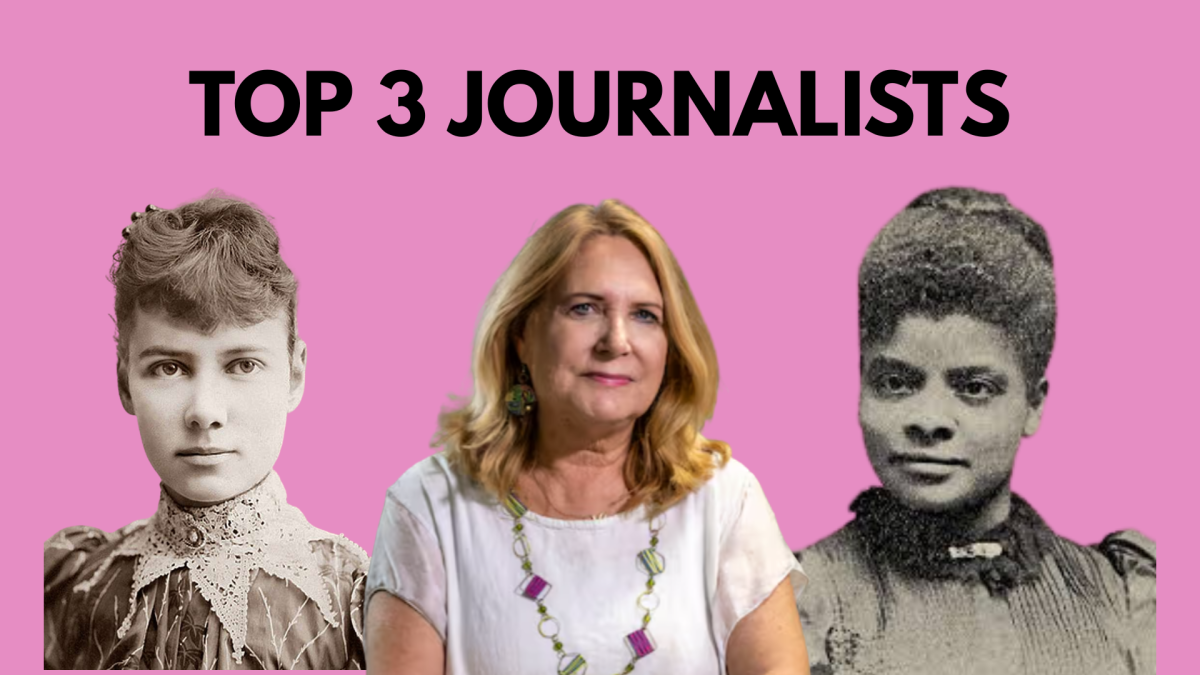
Your experience, along with the experiences of thousands of others, would have been lost in history if it weren’t for Nellie Bly. Later, journalists like her, including Julie K. Brown and Ida B. Wells, also brought light to hidden societal and political issues.
So, here are the top 3 investigative journalists:
1) Nellie Bly
Nellie Bly faked insanity to gain entry into Blackwell’s Island, a mental asylum. She stayed awake all night to achieve a “wide-eyed” stare, claiming that she lost her memory. She then insisted to the staff that other women in the boarding house were crazy and she feared them, and spoke incoherently to the police, doctors, and judges. When she arrived at the asylum, she discovered that patients were beaten, fed rotten food, forced to take freezing baths, and neglected by staff. Many people were not insane, but rather immigrants who could not understand or speak English. Bly published her findings in her novel “Ten Days in the Madhouse.” Bly pioneered “stunt girl” journalism, showing society that women could be capable of investigating dangerous stories.
2) Julie K. Brown
Julie K. Brown began investigating Jeffrey Epstein in early 2017. Alexander Acosta, the U.S. Attorney who approved Epstein’s 2008 plea deal, had just been nominated to be the Secretary of Labor. At this time, many victims were homeless or living at different places. Although many people were threatened to stay quiet, Brown was able to find and interview nearly 80 of Epstein’s victims. After months of research, Brown published her findings in a series in the Miami Herald, a major daily newspaper in South Florida. She gave a voice to the hundreds of girls who were silenced, exposing the systemic corruption that allowed Epstein to continue his abuse for over two decades. In 2021, she published a book, “Perversion of Justice,” detailing her struggles as powerful authority figures opposed her reporting.
3) Ida B. Wells
In 1892, Ida B. Wells began investigating lynchings in the South, which was extremely dangerous, especially as a Black woman. To understand what really happened, she visited the locations herself. There, she interviewed eyewitnesses and families, comparing how white newspapers reported lynchings to uncover bias or false claims. After a few months, she published her findings in “The Memphis Free Press and Headlight”. Although a mob destroyed her newspaper office, forcing her to leave Memphis, she continued to speak out nationally against racial violence.
These journalists’ courage shows that journalism can create real change and keep truth alive for generations. If you see something wrong, don’t be afraid to speak out! One person can make a huge difference.