

From tapping feet to fidget toys, fidgeting seems really random. However, it may be the mind’s way of staying focused. The Fidgeting phenomenon relates to many of the students at Mt. SAC Early College Academy, but the real question is: why does this happen? Hundreds of different studies have been conducted seeking to answer this very question. A study from BBC clarified that a big cause boils down to anxiety and boredom. When people are bored, uncomfortable, anxious, or nervous, they tend to fidget whether they notice it or not.
What is Fidgeting?
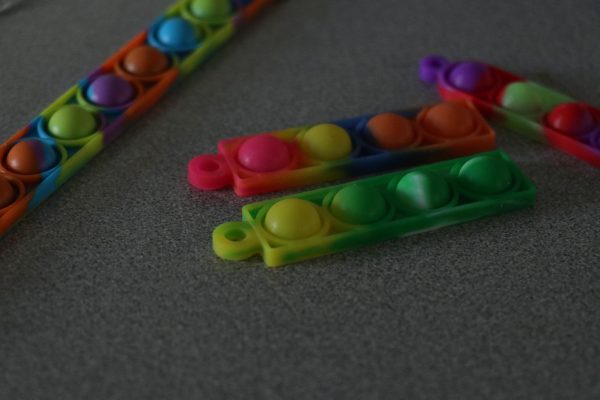
Fidgeting can be described as a repetitive physical habit that occurs intentionally or unintentionally. Fidgeting varies from small actions such as tapping your feet, cracking your knuckles, table tapping, to more complex ones like playing with fidget toys like Pop-Its or Rubik’s cubes.
Why do MECA Students Fidget?
MECA Sophomore Isaac Rico-Perez said in an interview that he does random movements whenever he is bored.
“I usually just like to tap my feet or mess around with random stuff near me like pens or bracelets,” said Rico-Perez. “It keeps me entertained.”
Another sophomore, Lily Erazo, explained that she never realizes that she fidgets. However, she does enjoy playing with fidget toys.
”I don’t really catch myself fidgeting at all,” Erazo said. “I love Pop-Its and NeeDoh cubes”.

While there isn’t a direct link between the part of the brain and fidgeting, it has come to light that a region in our brain called the hypothalamus. A study conducted by WebMD, which involved a test on rodents, discovered that when the hypothalamus was stimulated, the rodents would show increased physical activity..
Studies have also shown that constant fidgeting is a trait of ADHD: “Fidgeting is a common trait of ADHD (attention-deficit/hyperactivity disorder),” A UC Davis study reports. However, while fidgeting may be a trait of ADHD, it does not directly mean that one has ADHD. Fidgeting is also associated with the body’s natural way of regulating weight. In an eight-week, medically reviewed study by WebMD, it was discovered that fidgeting seemed to be one of the body’s methods of preventing overeating.
Whether you notice it or not, almost everyone fidgets for a number of different reasons. While you can pop a Pop-It or squish a Nee-Doh cube, there’s always a way to fidget. Between nervousness and boredom, there’s also always a reason.