
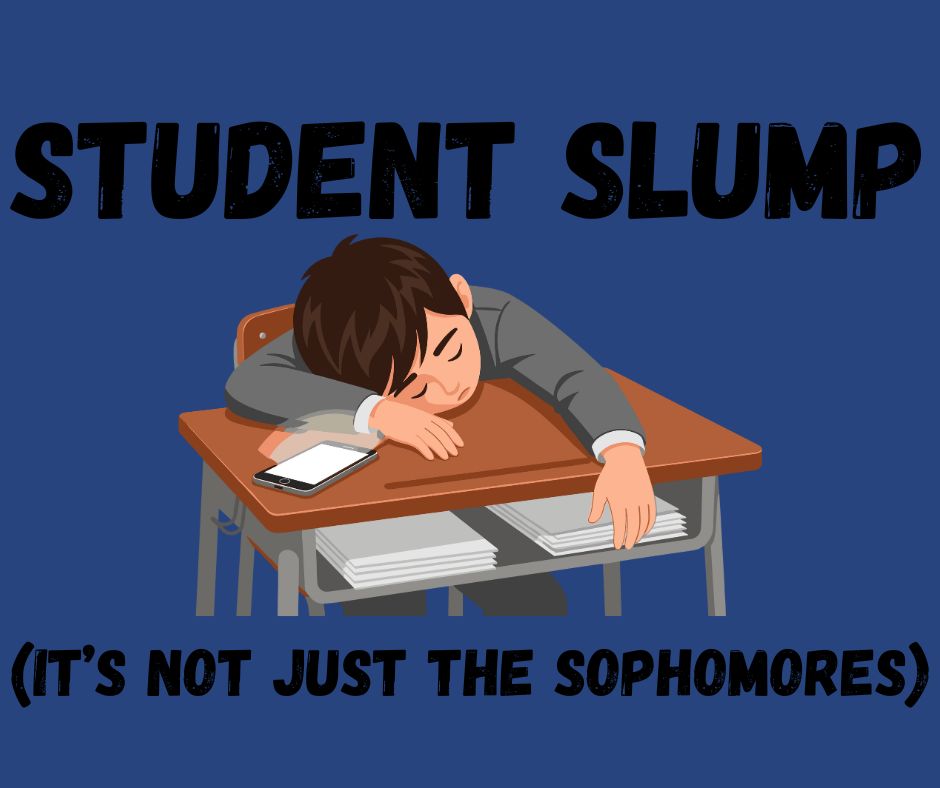

The term “sophomore slump” has been passed around for quite some time, relating to a lack of interest regarding educational experience and a drop in motivation following their freshman year. But, it seems as if this phenomenon isn’t just limited to sophomores—it’s with all students.
“I guess the biggest issue… [is] just making sure that everyone’s on task… not being distracted by other stuff,” Spanish teacher Johan Cordero said.
With the use of technology, students have been incredibly reliant on the constant dopamine rush that entertainment apps provide. Whether they’re consumed by their phones or their Chromebooks, teens across MECA struggle to stay focused.
In turn, this absence of engagement has led to a decline in performance, especially now after COVID-19.
“You just feel like you’re giving up,” sophomore Sophia Sanchez said, “like you can’t, like do it…a lot of thoughts will get in your head.” For Sanchez, the work seemed to pile up after a while, as school lost its appeal sometime during seventh grade.
Now at MECA, the criteria has started to change.
“I guess you’d say you compromise, like, your standards over time. It just became easier,” physical education teacher Matt Johnson said.
For many teachers like Johnson, PE has become nothing more than an “easy A.” Not only has the system been adjusted to fit the needs of students, but teachers have found themselves trying to accommodate and ultimately lighten the workload of their current students.
“[They] just make it easier so that people can kind of get through it and pass, which is a sad state of affairs,” Johnson added.
This lower requirement in educational policy is only serving to fuel the fire of this “slump,” spreading a system of half-done efforts, unprepared students, and a level of expected reliance on others for guidance.
“[Students] will not know how to deal with failure, will have significant learning gaps, and will miss out on the character formation that comes with being challenged,” stated an article by the Committee of Education and Workforce.
The struggles, or lack thereof, will undoubtedly prevent them from growing, allowing this cycle to persevere.
“Your brain is like a muscle” is a phrase often used to describe this learning process. Just like building up endurance, students need to constantly try their limits–and their academic capabilities to see results.
Without the right focus, many teens find it difficult to attempt this, let alone get off their phones. Sanchez noted how she, like others, struggled to maintain interest in school.
“I kind of just didn’t care about school at that point,” said Sanchez.
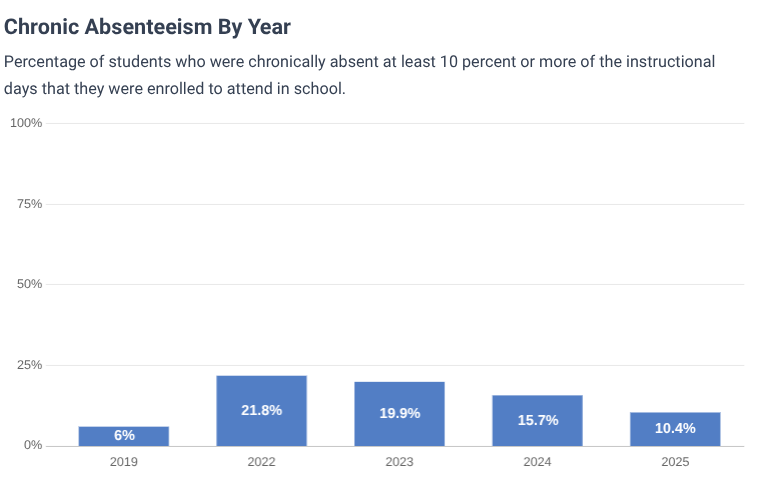
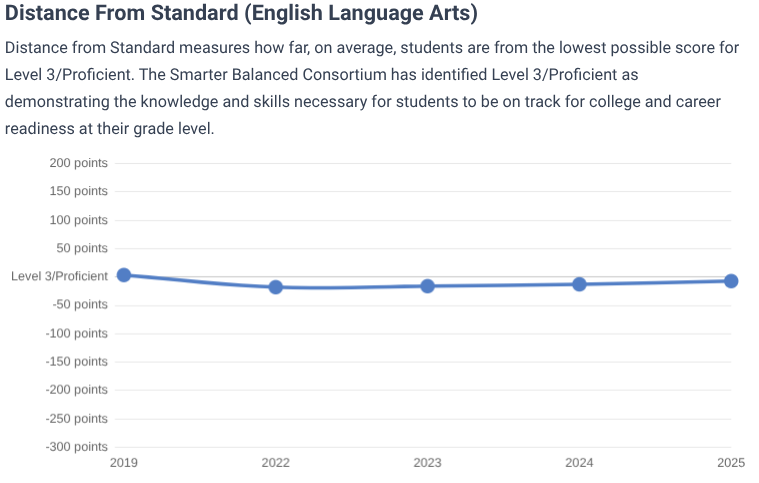
The California School Dashboard has reflected this through its data, showing both absences and academic performance.
Rates from 2019 to 2025 have slowly lowered throughout the years following the pandemic, noting changes within the Chronic Absenteeism of students during the school year. The data serves to bring hope back to districts, as major absences slowly return to their pre-COVID levels.
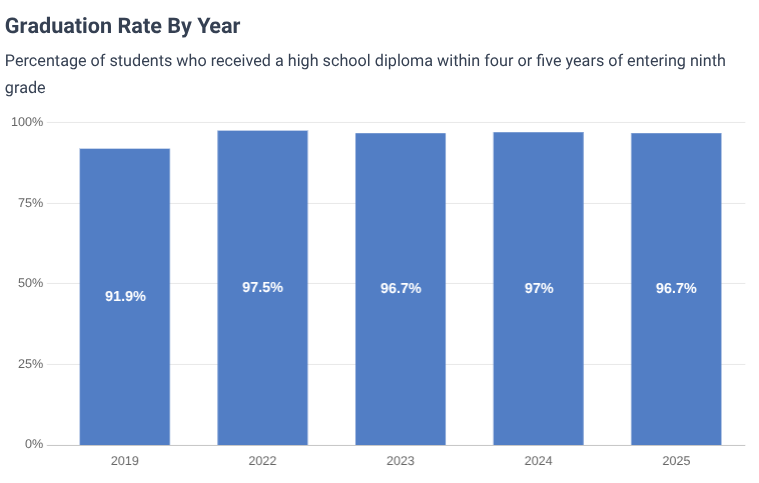
Considering that the overall standard for English Language Arts has been below the required quality of understanding for more than 3 years, it may become a cause for concern, especially when compared to the ever-increasing graduation rates.
The article “Covid’s long shadow in California: Chronic Absences, student depression and the limits of money,” stated that a majority of California’s school districts,“remain below pre-pandemic levels in standardized test scores—31% of a grade equivalent below in math and 40% of a grade equivalent in reading.”
So we are faced with a lingering question: Are students being graduated based on their understanding or the system’s urgency?
The California Department of Education attempted to address the declining rates, passing Assembly Bill 104 on August 16, 2021. Through this, the CDE created an opportunity to “[complete] courses through a fifth year of instruction, credit recovery, or other opportunity to ensure students graduate with their high school diploma.”
The level of lenience given to students has only increased, with several opportunities to make up credit made available through the simple process of filling out a form.
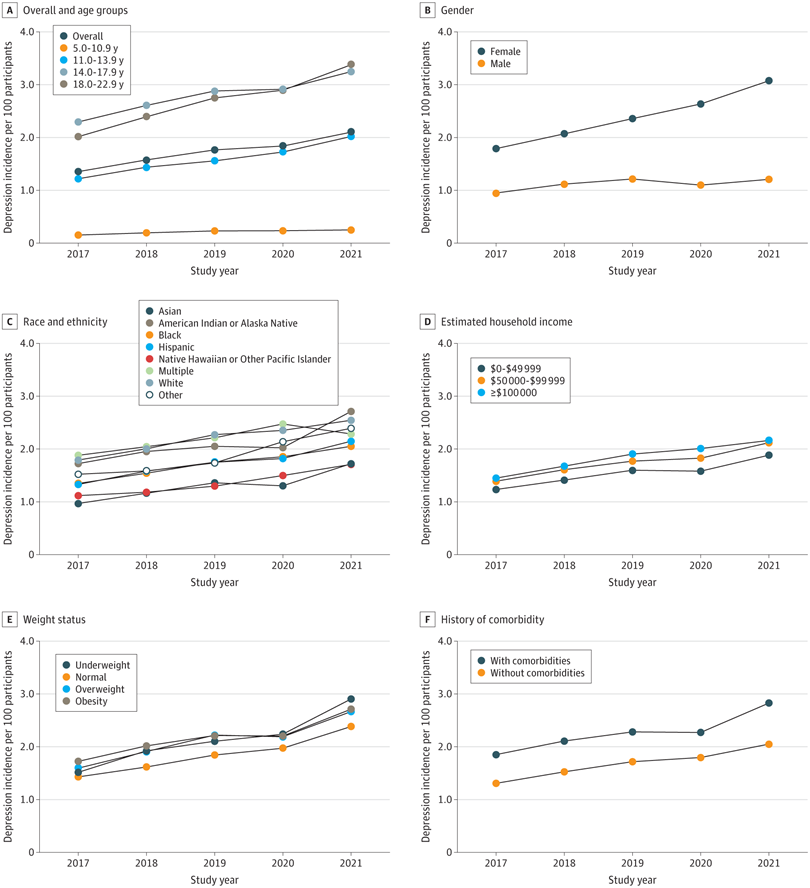
Had that not been enough reason for change, the mental side effects have created more issues than before. The Journal of the American Medical Association noted the ways in which clinical depression further increased from 2017 to 2021. Depression is only one form of mental dissonance in teens after COVID.
“Once you’re like a, a straight A student, and you get like, bad grades, you’re gonna go down…where you’re like.. I’m not good enough,” said sophomore Kyle Cao.
There has been a decrease in overall self-worth, ultimately rooted in a lack of academic success and the ability to complete assignments. Often, students are aware of their destructive habits, yet find themselves struggling to combat them.
“I want to see her happy, but like, I think she’s kind of… a little sad that I’m staying up late,” said Sanchez.
Teachers like Johan Cordero at MECA have been trying to combat this.
Cordero said, “I noticed that, like, if I have a purpose, you know, towards that assignment, and realize the purpose and motive… then they do it.”
Despite the struggles that educators face, some find ways to work around student challenges, providing them with direction in a way that follows student behavior rather than against it.
Even though the climb back to “normalcy” may not be replicable, we’re each doing our part to come close.


Anahi V • Dec 9, 2025 at 10:17 am
I agree with Mr.Codero. If you´re really passionate about something you want to achieve/have to earn through hard work, you´ll do it no matter how difficult it is.