
Imagine working a 12-hour shift in a factory. Your hands bleed from sorting out needles, and your eyes water from the unbearable smell of chemicals. This is the reality that thousands of workers endure every day in garment factories across developing countries. By buying from fast fashion companies, we support the exploitation of these innocent people, including children.
Problem
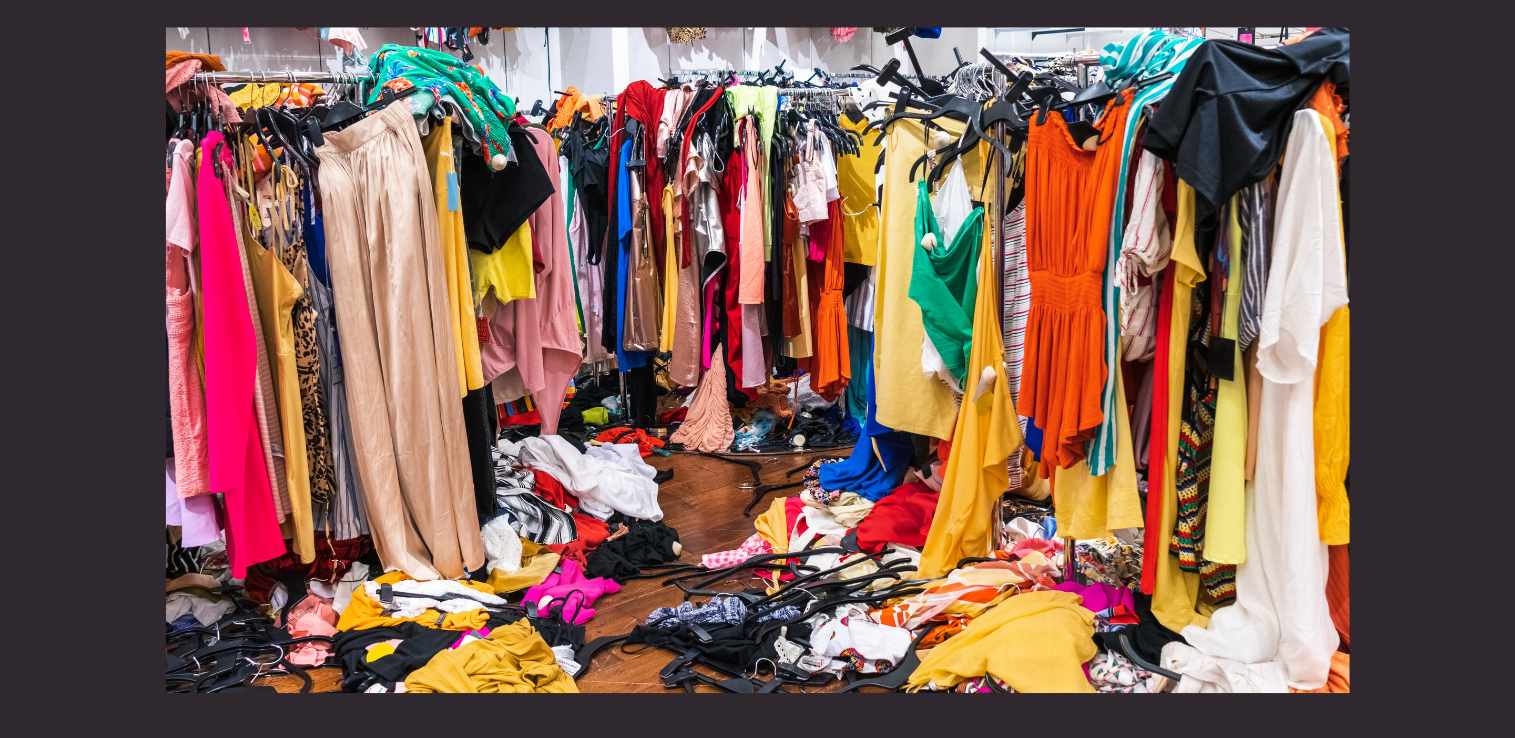
Fast fashion is the rapid production of cheap clothing. While this may sound enticing to consumers at first, fast fashion companies do more harm than good. First, these companies degrade the environment. Tons of unwanted clothes are sent to the Global South. However, most of these clothes are not reusable or recyclable. Instead, they end up on beaches and in landfills, polluting the ocean with toxic dyes and metals. Although high-income countries are the main consumers of clothes, low to middle-income countries suffer the consequences.
Furthermore, according to an article published in 2022 at the European Environment Agency, “approximately 35% of microplastics released to oceans globally originate from washing synthetic textiles.” These plastics move up the food chain when low-level organisms are eaten by predators. Over time, chemicals in the plastics accumulate in humans. The health effects range from infertility to obesity and even cancer.
Additionally, millions of tons of textiles decompose in landfills every year. According to an article written in 2024 by Carbone and the Conversation US in Scientific American, the fashion industry “is responsible for an estimated 8% to 10% of global greenhouse gas emissions.” These gases contribute to global warming, killing nearly one million species. This impairs ecosystem services, such as air purification, and decreases resilience to disruptions.
Second, many fast fashion factories employ children. In a video published in 2025 by Project Happiness, a twelve-year-old girl named Jui is interviewed. She shared, “My dream was to be a doctor, but since I can no longer do that, I work in clothing factories to pay for my sister’s education.” However, even after sacrificing her sleep, relationships, and dreams, she is not paid enough to bring her family out of the slums. According to an article published in 2025 on Earth Day.org, there are about “60 million factory workers worldwide, yet less than 2% earn a living wage.” This traps families, including Jui’s, in cycles of poverty.
Due to violence from people in power, workers cannot safely speak out. For example, although cracks had appeared in the building, workers in Rana Plaza were ordered to return to work. Some were threatened with losing their jobs, while others were falsely reassured that the building was safe. According to a book published by Heuer and Becker-Leifhold in 2018, after the building collapsed, “more than 1,100 workers died, and more than 2,400 were injured.” Some workers even had their limbs amputated without anesthesia in the rubble. Despite this trauma, survivors were not given enough to cover their medical expenses.
Causes
First, the rise of consumer culture fuels fast fashion companies. One major reason for this is a desire to stay in style. According to a book published by Heuer and Becker-Leifhold in 2018, “mass communication allows the consumer access to increased information surrounding the latest trends or styles.” These rapidly changing trends are promoted by celebrities and influencers, particularly on social media. This encourages customers to make purchases to maintain a desired image and gain social acceptance.
Another reason is a desire for instant gratification. Fast fashion companies offer low prices, which allows people to buy large quantities of clothes and stimulates dopamine secretion. This is especially appealing in today’s inflated economy, where goods are more expensive than before.
Second, fast fashion brands use planned obsolescence to encourage frequent purchases. Traditionally, brands plan two collections annually based on the previous year’s sales. An academic paper written in 2006 by Barnes and Greenwood states, “the number of planned seasons has significantly increased in response to consumer demand for newness, resulting in as many as 20 ‘seasons’ per year.” These clothes are designed to quickly become outdated, prompting consumers to buy more to stay in style. Additionally, fast fashion companies make clothes from cheap, synthetic materials. For example, after a few washes, cheap polyester loses shape and color. This creates a constant need for replacements that draws people back into stores.
Solutions
First, campaigning helps survivors and can prevent fast fashion from claiming more victims. After being injured in the Tazreen factory fire, Begum’s health continues to decline. Her sister, who was also a victim, recently passed away. Now, nobody is able to take care of the family. In a 2016 article in Fashion Revolution, Begum states, “I want compensation…and I want to see that the person who is responsible for it is punished.”
To begin, campaigning pressures companies to be transparent. After the Rana Plaza collapse, global outrage led to the “Who Made My Clothes” movement. Thousands of people tagged fast fashion brands in their posts. This increased public awareness of worker exploitation. Widespread attention also pressured companies to respond. According to a 2018 article in Fashion Revolution, “3838 fashion brands and retailers …responded with real information about their suppliers.” This makes it more difficult for companies to hide unethical practices.
Additionally, campaigns push companies to take accountability. During the COVID-19 pandemic, fashion brands refused to pay factories, and factories could not pay workers. Organizations started a campaign called Pay Up. They first posted a petition for brands to #payup, which more than 270,000 people signed. They also published a list of brands that failed to pay factories. To protect their reputations, which are essential for customers, brands responded. According to a 2022 article by Snowden in Remake, in just two years, the campaign helped recover “22 billion…owed to factories and workers.”
Moreover, the WhoMadeMyClothes campaign encouraged people to be more sustainable. According to a 2018 article in Fashion Revolution, “over 70 high-profile vloggers across the globe made their own #haulternative videos.” These videos range from thrifting vlogs to “shop in your closet” challenges. They appear on the same platforms where fast fashion is promoted, which interrupts impulse-driven buying. By showing how to reduce overconsumption without sacrificing style, they make sustainable choices look more socially accepted.
Second, people should shop for second-hand clothes. According to a 2020 article by Bauck in Fashionista, “65% of secondhand clothing purchases in the U.S. prevented the purchase of something new.” This disrupts the cycle of constant consumption. Consumers can satisfy their desires for novelty by buying clothes that have already been produced. Also, according to an article published by Li in 2024 on Science Direct, “second-hand trading can reduce the carbon footprint of fast fashion by 90 %.” When people buy fewer clothes, production decreases. This reduces resource-intensive processes such as textile manufacturing, which uses machinery powered by fossil fuels. Also, since less clothing ends up in landfills, fewer greenhouse gases are emitted during decomposition.
Conclusion
Due to their negative impacts on the environment and society, fast fashion companies should be boycotted. Now that you know more about the costs of fast fashion, I urge you to campaign against fast fashion brands and embrace second-hand shopping instead. For example, Remake’s No New Clothes challenge is happening now. There are also many thrift stores nearby, such as Goodwill, which offer cheap, stylish clothes.
Ultimately, by making conscious choices, we can reduce pollution, protect workers, and shift the fashion industry toward a more sustainable future.